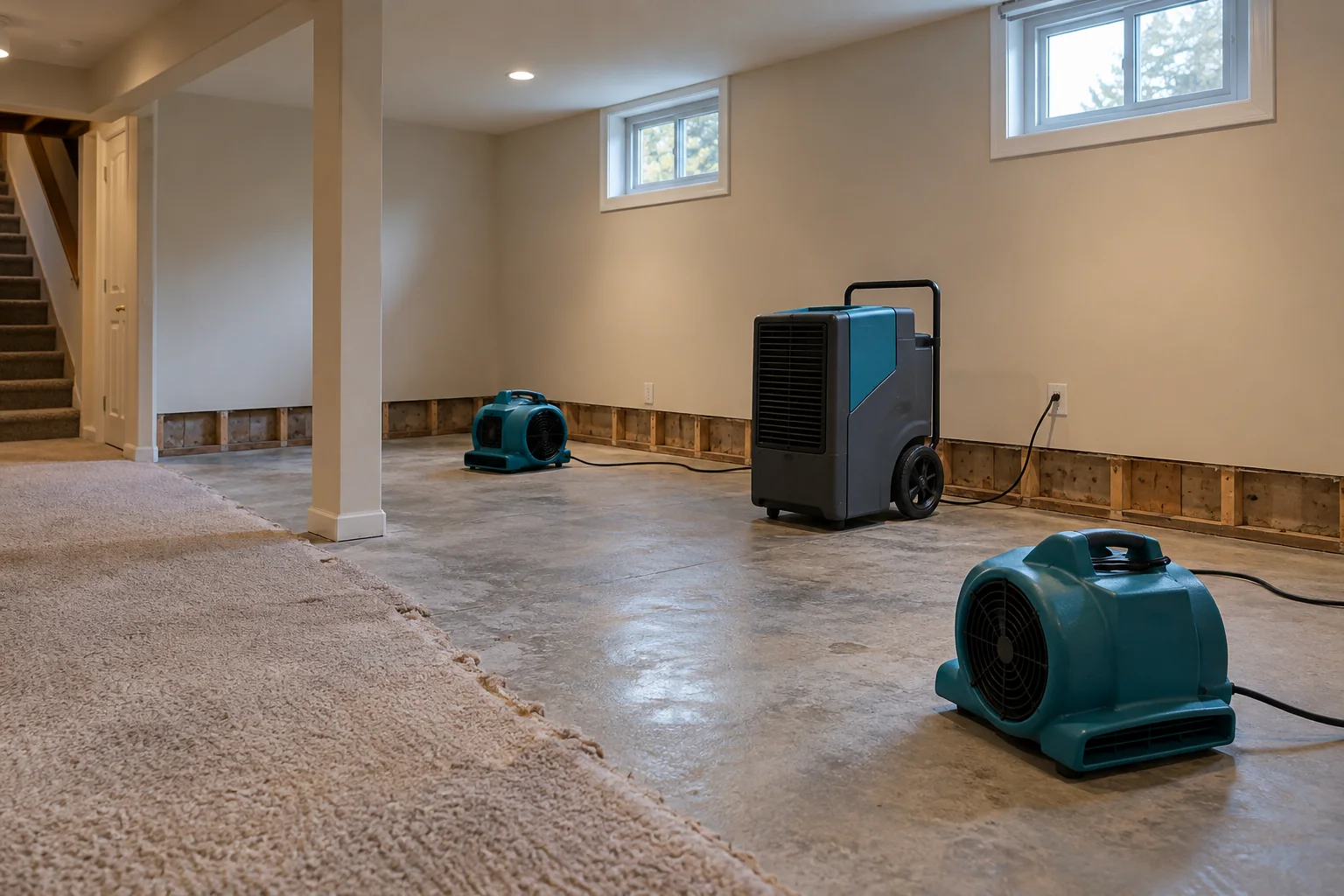
Coordinate basement cleanup and drying after a pump, power or discharge problem.
When the sump system stops keeping up
A sump-related basement flood can involve a failed pump, loss of power, a discharge problem or another issue requiring diagnosis. A pump that is silent, running continuously or surrounded by water does not by itself explain the cause. The immediate concern is safe access and controlling entry; the next concern is the water already absorbed by the basement.
Call 586-488-0137 for sump pump failure cleanup in Sterling Heights. Explain whether water is still rising, whether the power is out and whether the basement is finished. Do not approach a wet electrical connection or reach into a flooded sump area to investigate. A qualified professional should determine the source and the appropriate repair.
Keep the pump problem and cleanup connected
The source specialist may evaluate the pump, controls, power supply and discharge arrangement. Restoration work addresses the water on the floor and the materials it reached. These tasks often overlap in time but should have clear responsibilities. Ask who is correcting the source and who will confirm that ongoing entry has been addressed.
If the pump is replaced while carpet, insulation and wall edges remain wet, the interior still needs assessment. Conversely, drying equipment cannot compensate for continuing water entry indefinitely. The recovery plan should explain how conditions will be monitored if the source is temporarily controlled while permanent work is being arranged.
What a basement assessment should include
Water can spread from the sump area into adjoining finished rooms, closets and spaces behind stored belongings. Flooring layers can conceal moisture beyond the visible puddle. A useful inspection follows the route of water and accounts for the materials in each space, including the lower walls and any cabinets or shelving that contacted it.
Ask whether the water condition changes cleaning or removal decisions. A sump-related event should not be labeled clean solely because the water looks clear. The source, route and elapsed time matter. If a floor drain also backed up, mention that specifically, because sewage cleanup considerations may affect the plan.
Tell us the source, rooms affected and your Sterling Heights location.
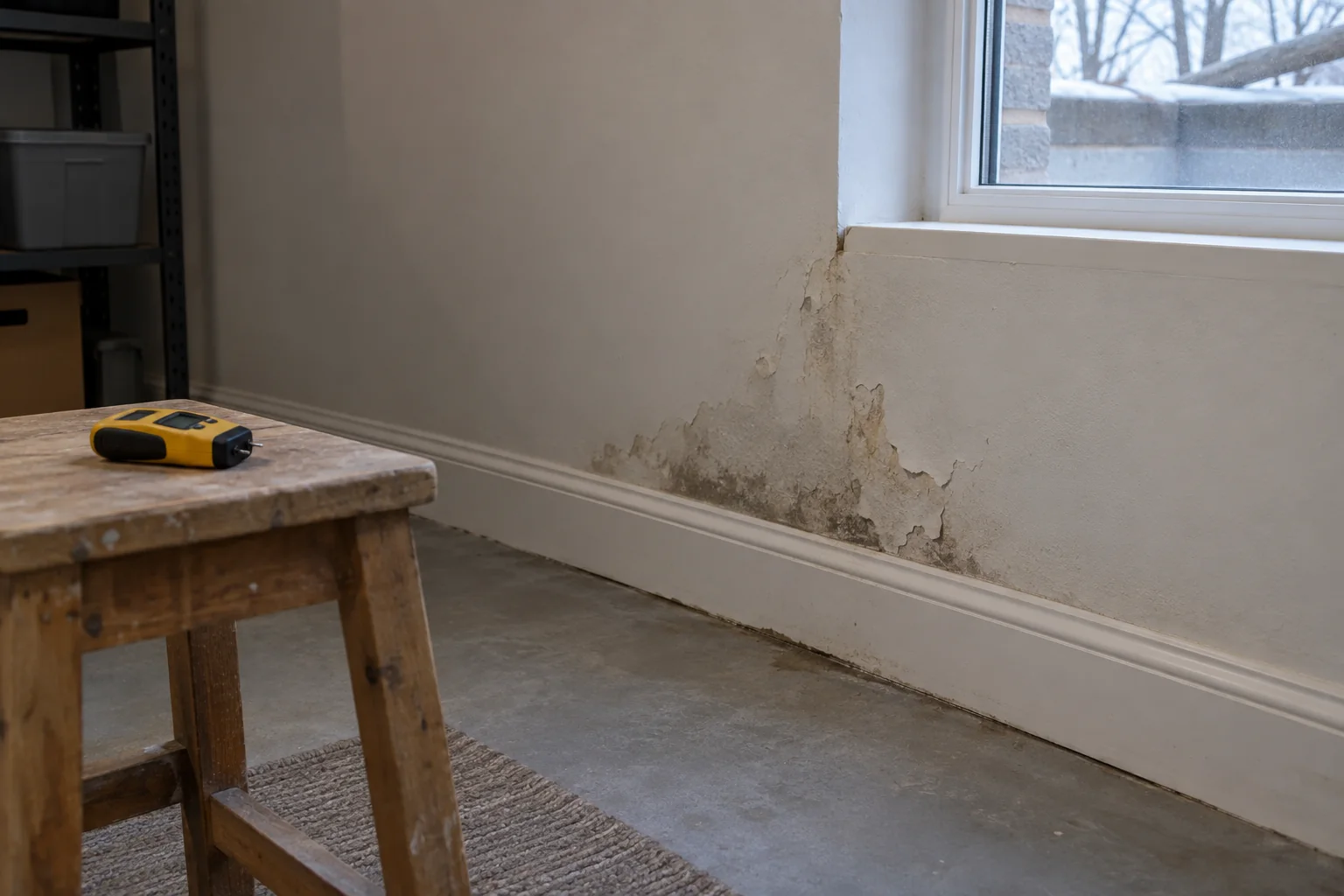
Extraction and drying after source control
Accessible standing water is removed using equipment appropriate to the conditions and access. Contents may need to be moved or sorted before the full footprint can be assessed. The next phase addresses material retention, cleaning, access and structural drying. Drying equipment should be monitored and adjusted as the building responds.
Ask which readings and observations will support completion. A slab that looks dry does not tell you the condition of carpet padding or the back of a finished wall. Repairing the visible floor covering should wait until the affected assembly and drying status are understood. Discuss who will restore finishes after mitigation so the project does not stop at equipment removal without a next step.
Example: a power interruption during rain
Imagine a Sterling Heights homeowner returns after a power interruption and finds water near the sump pit, along one finished wall and beneath storage shelves. The power returns, but the recreation-room carpet remains wet. The plan may include source-system evaluation, water extraction, contents sorting and assessment of the carpet layers and lower wall assembly.
The outage is part of the timeline, not proof that every component of the sump system is functioning correctly. A qualified professional can assess what happened and discuss suitable resilience options. This example is hypothetical and illustrates how source repair and restoration interact; it does not establish the cause of any actual property loss.
Questions for the source-repair specialist
Ask what failed, what was tested and whether the proposed work addresses the cause or only a symptom. Depending on the property, the discussion may include power, discharge and maintenance considerations. Do not assume a larger pump or a battery backup is the correct answer without an evaluation of the system and local requirements.
Keep the source report with the restoration records. If the problem returns, that history can help distinguish a new failure from an unresolved condition. Ask what maintenance checks are appropriate and who should perform them. The restoration website's cleanup guidance cannot replace the equipment manufacturer's instructions or a professional assessment of the installation.
Scope, cost and documentation
The cleanup estimate should explain the affected rooms, removal needs, contents handling, equipment and monitoring. The pump or discharge repair may be separate. Finished walls, layered floors and difficult access can create more work than the depth of the puddle suggests, so ask what the initial price assumes.
If you are pursuing an insurance claim, discuss sump-related coverage and endorsements with your insurer. Do not assume a backup system's presence establishes coverage or that every rain-related loss is treated alike. Record the timing, observed source conditions, repair findings and the authorized mitigation work in one place.
Sump failure cleanup questions
The pump works again. Do I still need drying?
Should I unplug the pump if the area is flooded?
Can cleanup include installing a new pump?
Is all water near a sump caused by pump failure?
Do finished basements take a different approach?
When can replacement flooring be installed?
Prepared for Sterling Heights property owners. Examples are illustrative; the scope, timing and material decisions require an assessment of your property.
Local service information ↗