Cleanup planning for finished basements, utility rooms, storage areas and lower-level living spaces.
A basement flood affects more than the floor
A basement may contain the family room, laundry, storage, furnace and electrical equipment within a few steps of one another. Water reaching those spaces creates several overlapping decisions: safe access, source correction, material cleanup, contents handling and the ability to use the home while recovery is underway.
For flooded basement cleanup in Sterling Heights, call 586-488-0137. Mention whether the basement is finished, how water appears to be entering and whether a floor drain, sump pit or failed pipe is involved. Homes around Dodge Park, the Utica Road corridor and other parts of the city need property-specific assessment; an address or neighborhood name does not establish the source or severity of flooding.
Start with access and the source
Stay out of standing water that may contact electrical systems. Do not approach a furnace, water heater, power strip or breaker panel through water. A professional may need to address utilities before cleanup access is safe. Avoid using basement appliances until their condition has been evaluated. For immediate danger, leave and call emergency services.
Tell the service contact whether the water followed heavy rain, appeared at a floor drain or began after a plumbing failure. If the source is unknown, say so. Groundwater, exterior flooding, sump problems and sewer backups should not be grouped into one assumed cause. The right cleanup sequence depends partly on where the water came from and what it contacted.
Finished rooms need a layered assessment
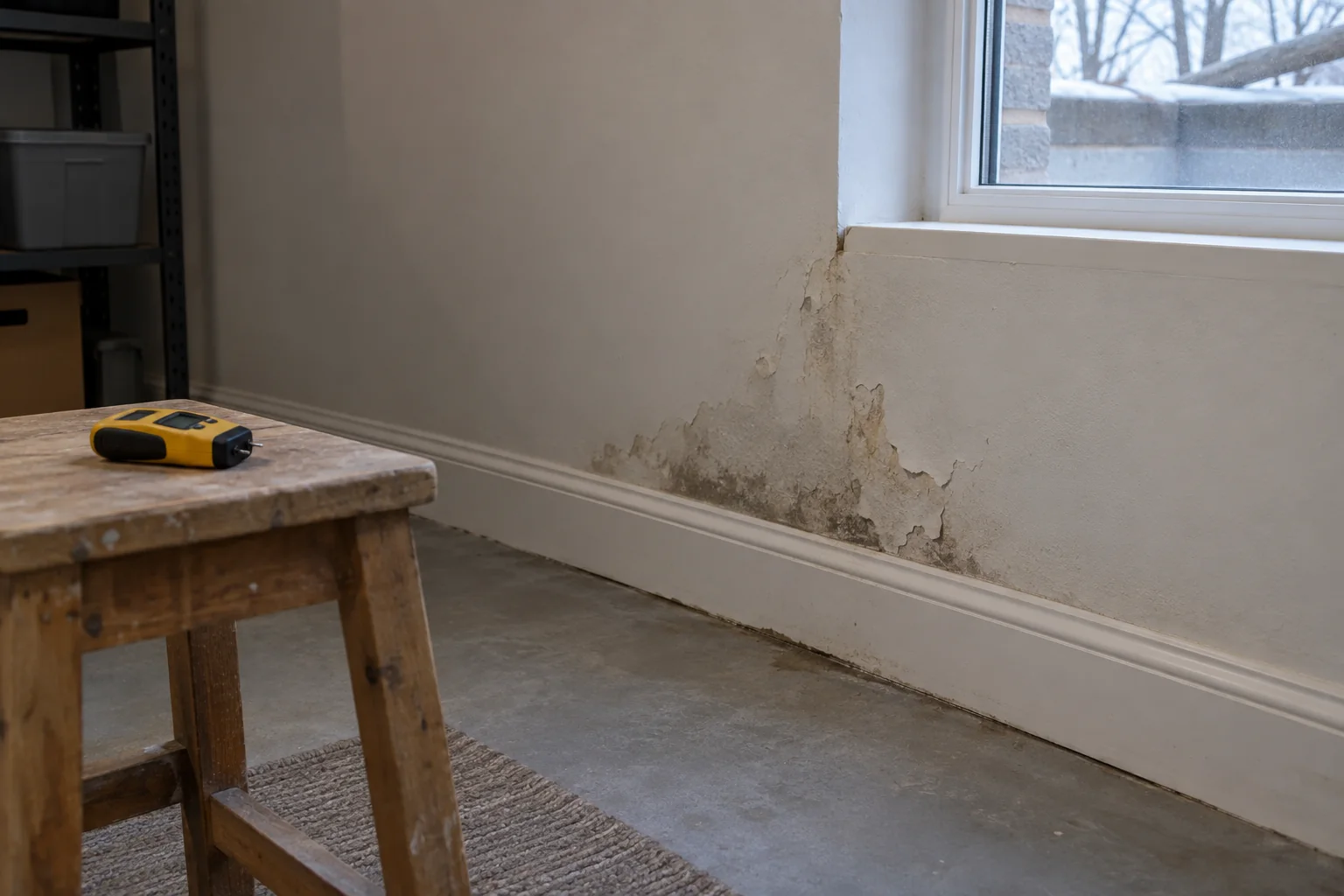
Basement finishes can conceal moisture. Carpet and padding, floating flooring, finished wall cavities, insulation and built-in shelving all change how a room can be inspected and dried. Water that crosses a wall opening may affect a closet even if its main floor area looks dry. Stored boxes can absorb water and hide damp surfaces behind them.
A useful assessment identifies the affected footprint and separates decisions for finishes, structural materials and contents. Ask which materials can be retained, what requires access and what cannot reasonably be cleaned or dried. If a wall is opened, the reason and proposed extent should be explained. There is no universal removal height or single equipment layout suitable for every basement.
Tell us the source, rooms affected and your Sterling Heights location.
A practical cleanup sequence
Once safe access and source control are addressed, work may include water extraction, contents sorting, cleaning, selective removal and drying. The order should reflect contamination and the layout. Wet materials should not be carried through unaffected living spaces without a plan for the route and protection.
Ask how the provider will manage stairs, doorways and daily access to essential equipment. If the basement contains laundry or the home's only storage area, discuss what can be used safely during the work. Children and pets need a clear boundary around work areas and equipment. Equipment should not be unplugged or moved casually because it interrupts normal room use; contact the provider to adjust the setup.
Example: water in a recreation room and utility closet
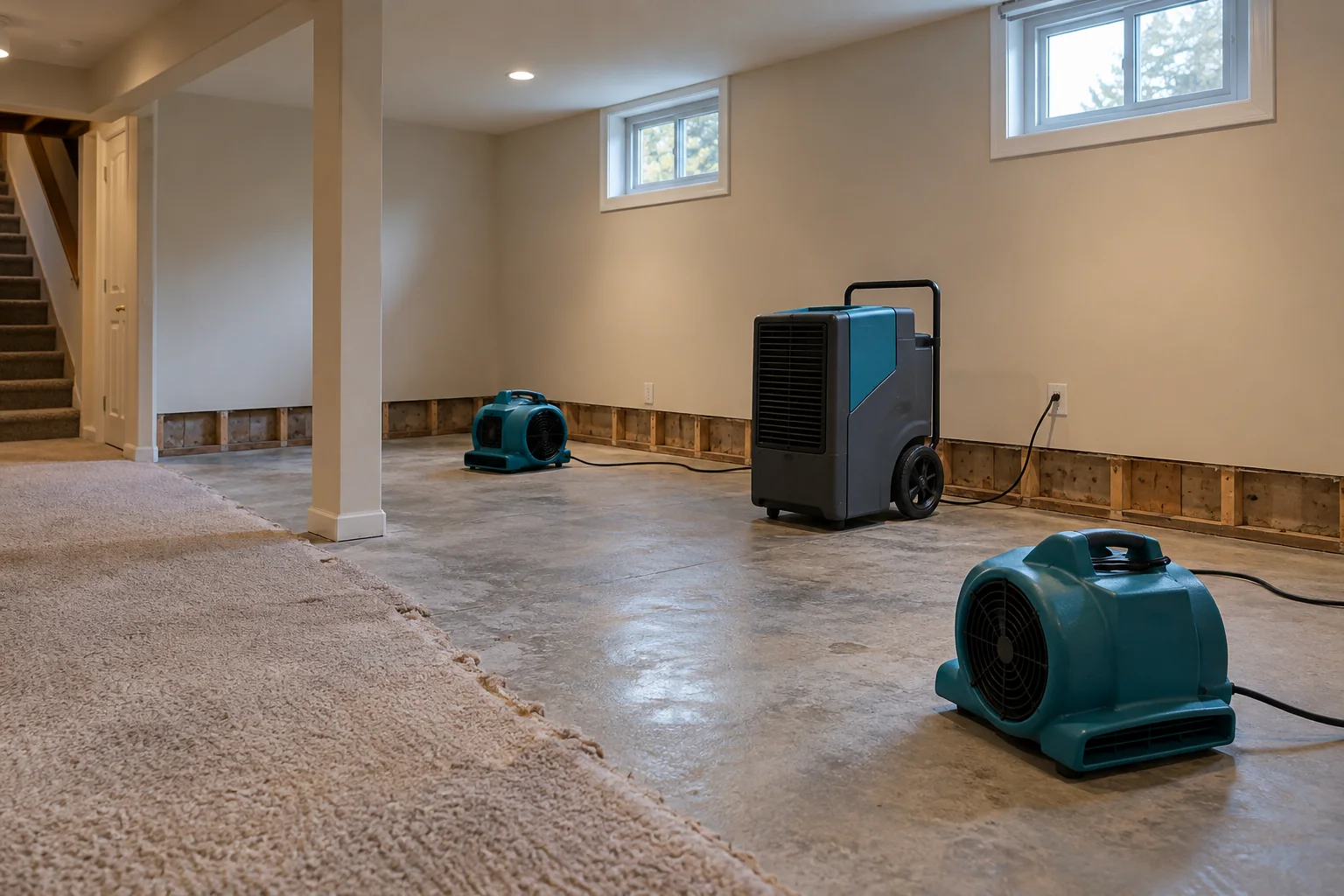
Imagine a finished basement where water is visible in the recreation room after a sump failure. The carpet is saturated near one wall, and boxes in the utility closet have wet bottoms. The assessment may need to include the closet perimeter, the floor layers and the lower finished wall, rather than only the open room shown in the first photograph.
The restoration plan can separate disposal decisions for low-value wet packaging from evaluation of important documents or furniture. Pump repair needs its own responsible party. Drying completion then needs to be considered before carpet or wall finishes are replaced. This is an illustrative scenario showing why a basement scope may expand beyond the first puddle; it is not a customer case study.
Sterling Heights flood information
The city's Flood Services resource identifies local waterways including the Clinton River, Red Run Drain, Plumbrook Drain and Beaver Creek, and explains how to check mapped flood hazards. A citywide flood map is useful background, but it does not diagnose a particular basement problem or replace a property assessment.
Even when water appears after rain, tell the evaluator where it emerged. A drain backup, water at a foundation joint and rain through an opening can involve different source specialists. Keep any observations about timing, rainfall and repeated incidents together so they can be reviewed with the person investigating the cause.
Cost, contents and the repair plan
Basement cleanup costs depend on the affected rooms, water condition, amount of finish material, access, stored contents and the later repair scope. Ask whether removal and disposal are included and how belongings will be listed or separated. A record of items considered for disposal can be valuable before decisions are made.
Before rebuilding, ask for the drying record and confirmation of who is responsible for preventing another entry. Replacing carpet while leaving a recurring sump or drainage issue unresolved can expose the new materials to another loss. Discuss policy questions with the insurer; basement flooding and sewer-backup coverage are not interchangeable assumptions.
Flooded basement questions
Can I walk downstairs to turn off the power?
Does clear water mean it is safe?
Can I keep furniture and stored belongings?
Do all wet basement walls need removal?
Will replacing the sump pump finish cleanup?
Can I get a price from a photograph?
Prepared for Sterling Heights property owners. Examples are illustrative; the scope, timing and material decisions require an assessment of your property.
Local service information ↗