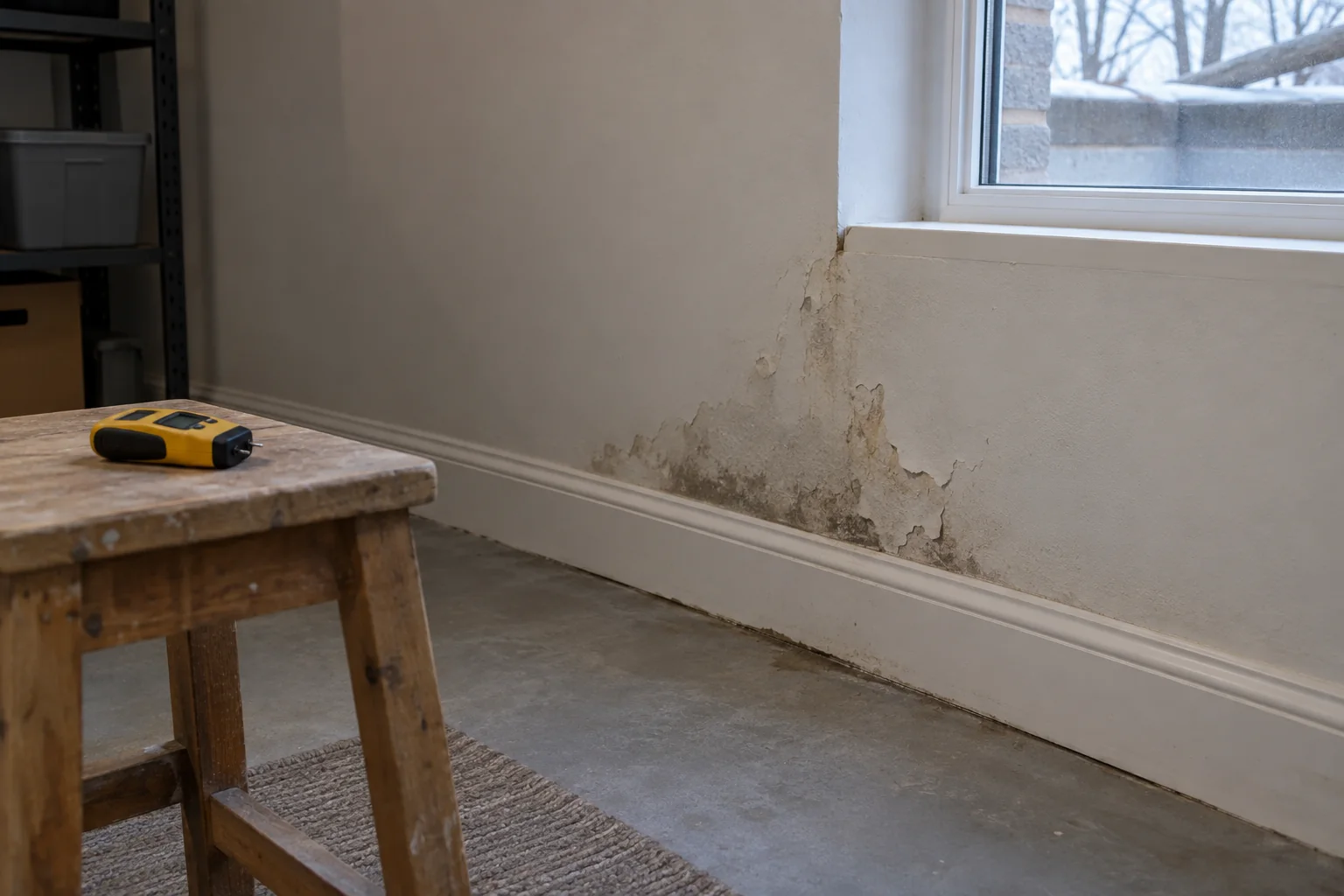
Follow the path of a supply-line leak through walls, ceilings and adjoining rooms.
When a pipe leak becomes a building problem
A failed supply pipe can release water behind a wall, beneath a bathroom fixture or inside a ceiling. The first visible sign may be a downstairs stain rather than a puddle at the source. Once the pipe is repaired, water already absorbed by the building can remain in insulation, flooring and enclosed cavities.
Call 586-488-0137 for burst pipe water damage cleanup in Sterling Heights. Explain whether the water is shut off, where the pipe failed and whether more than one level of the home is affected. A first-floor ranch layout and a two-story home with an upstairs bathroom present different water paths. The cleanup scope should follow that layout.
First priorities after a pipe failure
If a familiar shutoff is safely accessible from a dry location, closing it may limit additional release. Do not move through standing water to operate electrical equipment, and do not reach into a wet wall cavity. If the leak is above a sagging ceiling, keep people out from beneath it. A plumber should address the failed pipe; electrical exposure may require an electrician before restoration access.
Record when you first noticed the problem and whether the leak appeared suddenly or had earlier warning signs. A small drip that went unnoticed can create a different condition from a failure discovered immediately. Tell the evaluator about previous repairs, recent freezing conditions or appliance work if relevant. Those observations are useful without guessing at the cause.
Follow the route through rooms and floors
Gravity may carry water down to a lower ceiling, while flooring layers and wall openings allow it to spread sideways. Inspecting only the area directly below the pipe can miss adjoining spaces. A bathroom leak can affect a vanity base, the floor under tile, the hall outside the room and a ceiling below it.
Moisture assessment should identify affected materials and explain which spaces could not be reached. Instruments support the inspection but do not make every hidden space visible. If access openings are proposed, ask what they will help confirm and how resulting repairs are handled. Changes discovered after opening a cavity should be reflected in an updated scope rather than left as a verbal assumption.
Tell us the source, rooms affected and your Sterling Heights location.
Cleanup after the plumbing repair
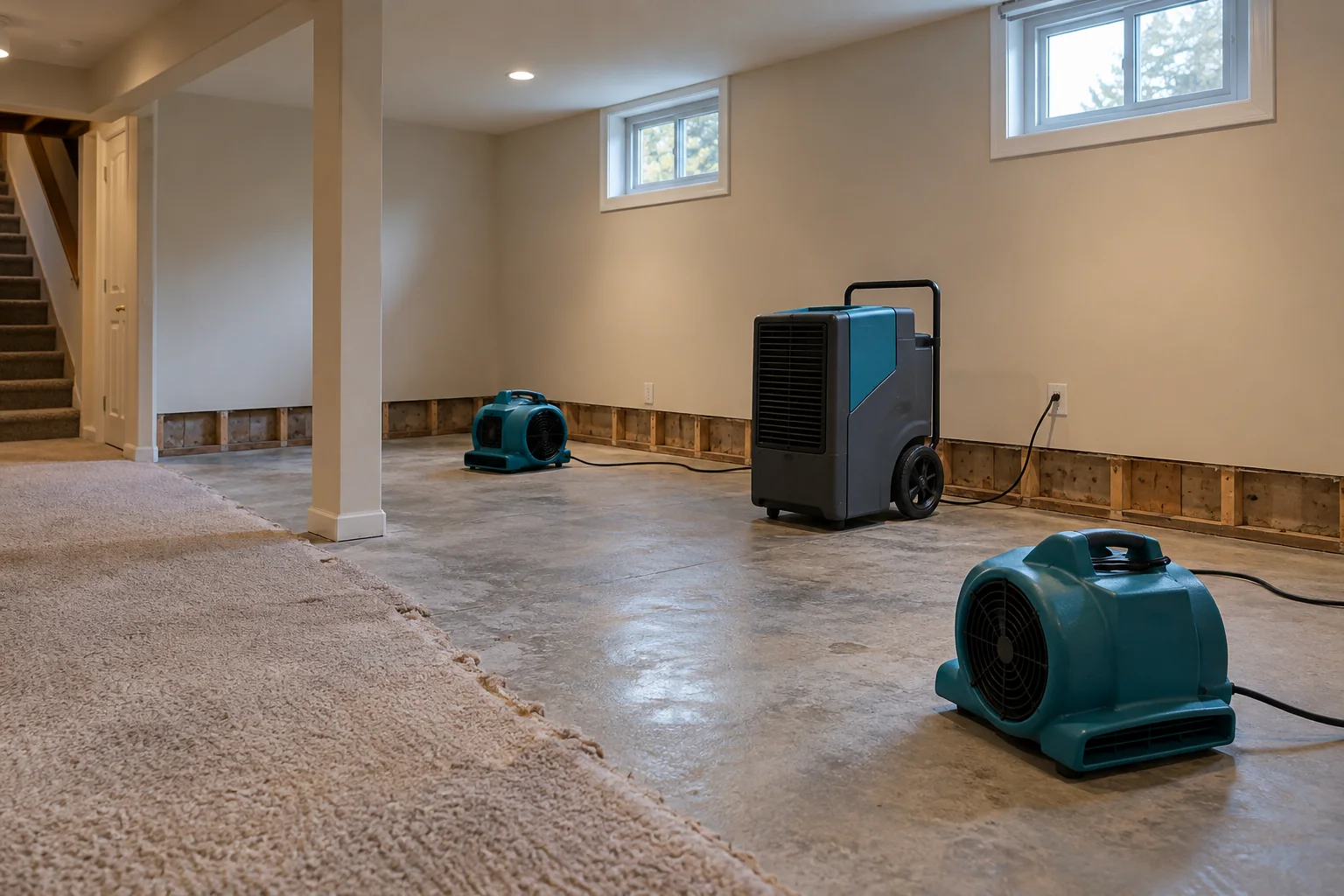
Once the source and safety conditions are addressed, the restoration plan may include extraction, cleaning, selective material removal and drying. Wet insulation and damaged finish materials require individual decisions. The fact that the original water came from a supply line does not settle every cleaning decision after it has passed through a building or remained in place.
Ask the provider to distinguish structural drying from replacement work. The plumber's repair invoice and the restoration scope should tell a consistent story about the location and timing of the loss. Do not approve a finish-only repair that leaves the affected assembly unexplained. A new ceiling surface should follow an assessment of what remains above it.
Example: an upstairs bathroom supply leak
In an illustrative Sterling Heights home, a toilet supply connection fails while the occupants are away. Water wets the bathroom floor and appears as staining in the room below. The repair plan might include the plumbing connection, assessment of the vanity base and floor layers, and controlled access to evaluate the ceiling cavity.
These are separate decisions within one incident. Replacing the connection is source repair; handling wet materials is mitigation; patching and painting are finish repairs. A written scope makes it easier to know who is responsible for each. This scenario is educational and does not describe a verified customer job or a standard scope for every bathroom leak.
Preventing the repair from hiding the problem
Ask how drying goals will be set and how progress will be documented. A ceiling stain can stop growing while insulation above it remains wet. Likewise, a floor can feel dry at the center while moisture persists at a cabinet edge. Completion should not rely only on a touch test or the disappearance of a drip.
If a pipe froze, have the underlying exposure evaluated by the appropriate professional. Cleanup does not correct a vulnerable pipe route or inadequate protection. If the source involved an appliance, clarify who will inspect and reconnect it. Source specialists and restoration work need a deliberate handoff before the room returns to normal use.
What influences the estimate?
The length of time the leak ran, affected levels, cavity access, flooring construction, contents movement and source location all matter. A short visible pipe section can still lead to a substantial interior scope if water has traveled through several assemblies. Conversely, a large-looking puddle may be relatively accessible. The assessment should explain the difference.
Ask for itemized mitigation and repair scopes, how hidden conditions will be handled and what documentation will be available. Your insurer determines coverage under your policy; a pipe failure is not an automatic approval of every repair. Keep the source-repair report, photos and authorizations together so the sequence remains clear.
Burst pipe cleanup questions
Should I wait for the plumber before calling restoration?
Is an upstairs leak always limited to the ceiling below?
Can a wet ceiling simply be painted?
Will you repair the pipe as part of cleanup?
What if the leak happened several days ago?
Does a burst pipe require replacing all flooring?
Prepared for Sterling Heights property owners. Examples are illustrative; the scope, timing and material decisions require an assessment of your property.
Local service information ↗