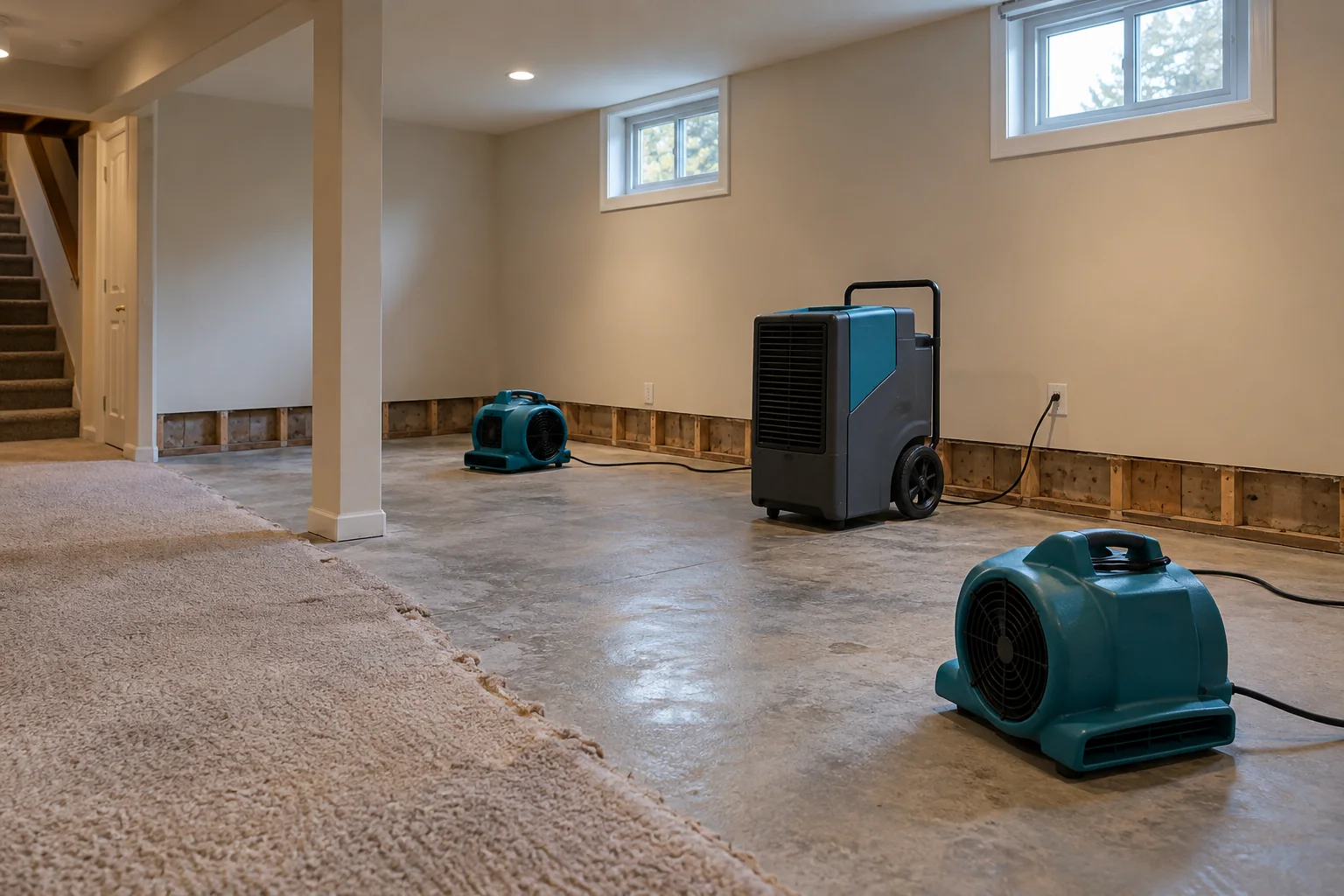
Remove accessible standing water and establish what still needs to dry.
Standing water needs a clear first step
Water extraction focuses on removing accessible liquid from an affected space. That may mean water across a basement floor, saturated carpet after a supply-line leak or water spreading from a failed appliance. For Sterling Heights property owners, the immediate concern is usually practical: how to stop the spread and what happens after the visible water is gone.
Call 586-488-0137 for an emergency water extraction inquiry. Share the location, the approximate depth, whether the source is still active and whether electrical equipment or a floor drain is involved. Do not enter the water to take measurements. A description from a safe doorway is more useful than putting yourself at risk for a closer look.
Before any water is removed
The condition of the room and the source influence the method. Water from an appliance connection should not automatically be treated the same as water that has come through a drain or entered from outdoors. Electrical exposure, structural concerns, hazardous materials and access also need to be considered before work begins. A flooded utility room can require another qualified professional before cleanup access is appropriate.
If you know how to close a nearby water valve safely from a dry location, source control may limit additional damage. Do not unplug equipment while standing in water or use a household vacuum for liquid removal. Keep children and pets out of the affected area. If there is immediate danger, leave and contact emergency services rather than waiting for a restoration assessment.
Choosing an extraction approach
The amount of accessible water, the entry route and the floor assembly help determine the equipment and work sequence. A large open slab presents a different access problem from a carpeted basement divided into small rooms. Water below cabinetry, underneath a floating floor or inside a wall cannot be evaluated only by looking at the exposed surface.
Ask what will be extracted, where the water will be handled, which materials will be evaluated after extraction and whether separate cleaning or removal is anticipated. Equipment should be appropriate to the water condition and the space. A scope should not describe the entire restoration as simply placing fans in the room once a pump has been removed.
Tell us the source, rooms affected and your Sterling Heights location.
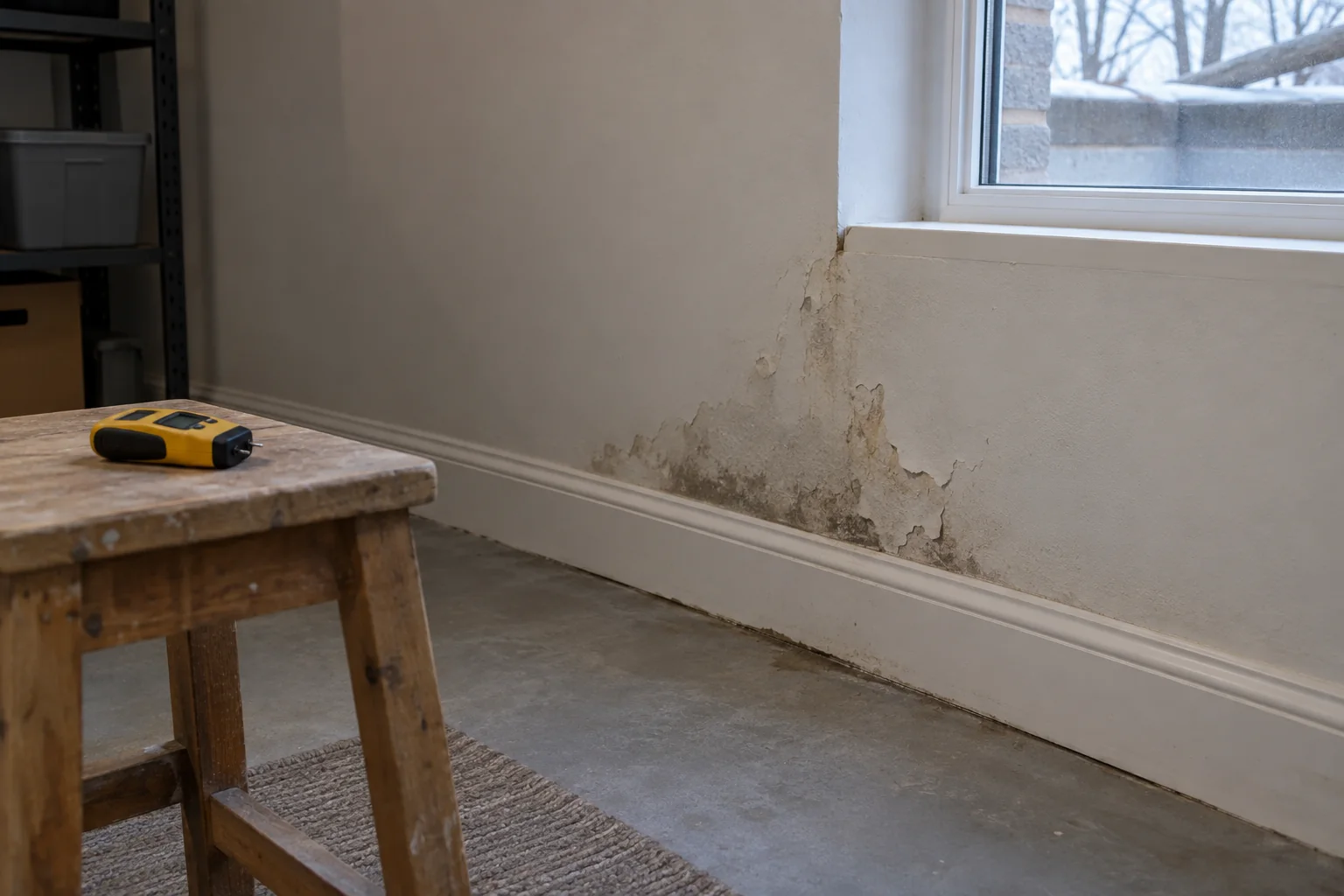
Why carpet and padding deserve separate decisions
A carpet's surface can look substantially better after extraction while its backing, pad or subfloor remains wet. Whether those layers can stay depends on contamination, material condition, elapsed time and the feasibility of cleaning and drying the assembly. Water at room edges may have reached baseboards and lower drywall as well.
Ask the evaluator to explain each layer. If removal is recommended, clarify whether the estimate includes detachment, disposal, contents movement and later replacement. If materials are retained, ask how drying progress will be checked. The point is to avoid replacing a single visible component while moisture persists below or beside it.
A Sterling Heights basement example
Imagine water spreading across a finished basement after a washing-machine supply failure. The open laundry area is easy to see, but water has passed through a doorway into a recreation room and closet. An extraction plan may begin with safe access and source control, then follow the water into both spaces instead of stopping at the laundry-room threshold.
After accessible water is removed, the next decisions involve the recreation-room carpet layers, closet contents, wall edges and any wet materials along the route. The washing machine's repair belongs to a separate source-repair conversation. This is a hypothetical example, not a completed job report or a promise that a particular carpet can be saved.
The handoff to drying
Extraction should lead to a defined next phase. That can include cleaning, removing materials that cannot reasonably be retained, establishing drying access and selecting equipment. Structural drying and dehumidification addresses retained moisture; it should be tracked using observations and appropriate material readings.
Ask when the next assessment will happen and who is responsible for contacting you. If the source is still unresolved, discuss how the plan will account for continued entry. Closing a room up before the source is controlled can lead to repeat work. A water-removal invoice by itself does not document that the structure is ready for new finishes.
What affects extraction cost?
Accessible volume, water condition, stairs, equipment access, the number of rooms, contents movement and disposal needs all affect the work. The same apparent floor area can involve very different scopes if one room is an open concrete slab and another contains soaked shelving, carpet and built-in furniture. Ask which tasks are included in the initial emergency scope.
Ask separately about subsequent drying, monitoring, cleaning and reconstruction charges. If more damage is found after water removal, the provider should explain the change before extending the authorized scope. Keep photos and the written work description with any source-repair records; they can help make the sequence understandable later.
Water extraction questions
Is extraction the same as complete restoration?
Can you remove water from a finished basement?
Should I start a household vacuum?
What if water keeps coming back?
Will extraction remove every stain and odor?
What should I have ready when calling?
Prepared for Sterling Heights property owners. Examples are illustrative; the scope, timing and material decisions require an assessment of your property.
Local service information ↗