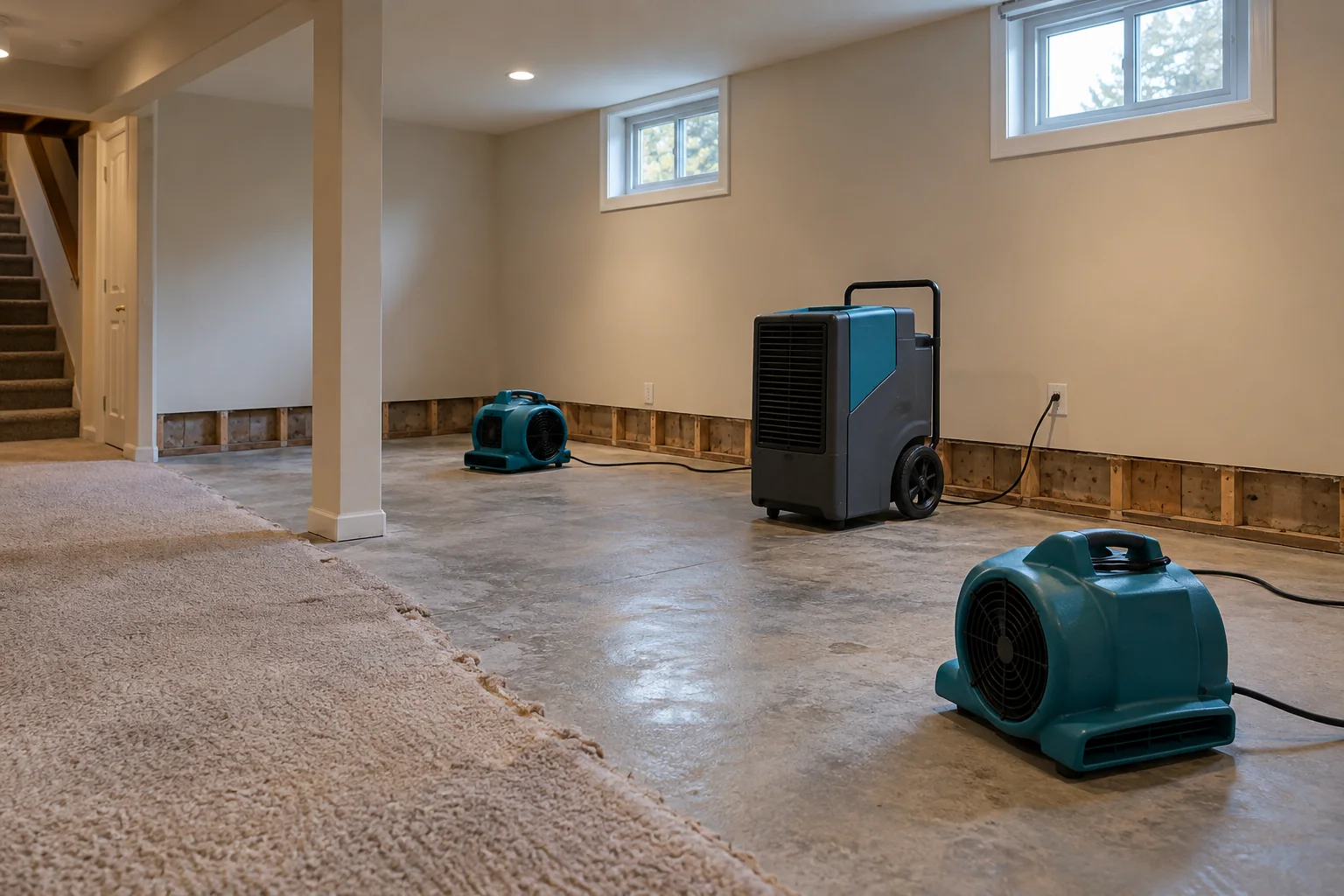
Understand moisture readings, drying equipment and evidence for the next repair phase.
Drying the building, not just the air
Structural drying addresses moisture retained in building materials after water damage. It may involve a subfloor, framing, lower wall sections or a ceiling assembly. A room can feel comfortable while moisture remains behind finishes; a dehumidifier's collection tank does not tell you which materials are ready to close up.
Call 586-488-0137 to discuss structural drying and dehumidification in Sterling Heights. Mention the original water source, what has already been removed, whether extraction has occurred and whether another contractor is waiting to make repairs. Knowing the current stage helps clarify whether the property needs assessment, drying or a coordinated handoff.
Begin with a material-specific baseline
A useful drying plan starts by identifying the affected materials and their starting condition. Readings should be interpreted in context: the device, material, measurement location and comparison conditions matter. A number without those details is not a universal dry-or-wet verdict. Thermal imagery can suggest where to investigate, but a temperature pattern alone does not prove the presence or absence of moisture.
Ask how the drying goal is determined and how the same locations will be tracked over time. Accessible unaffected material may provide useful comparison information when appropriate. The record should make it possible to understand progress, identify areas that are not responding and explain why the equipment arrangement changes.
Air movement, humidity and access work together
Air movement supports evaporation from appropriate exposed materials; dehumidification removes moisture from the air. The relationship between those tasks and the building conditions matters more than the number of machines visible in a photograph. Temperature, ventilation, room layout and material layers can all affect the drying approach.
Drying access can be a major factor. Water behind a cabinet base or beneath a low-permeance finish may not respond like an exposed slab. Ask whether access changes or selective removal are proposed and why. Equipment should be selected after contamination and safety concerns have been considered, not placed indiscriminately into every wet room.
Tell us the source, rooms affected and your Sterling Heights location.
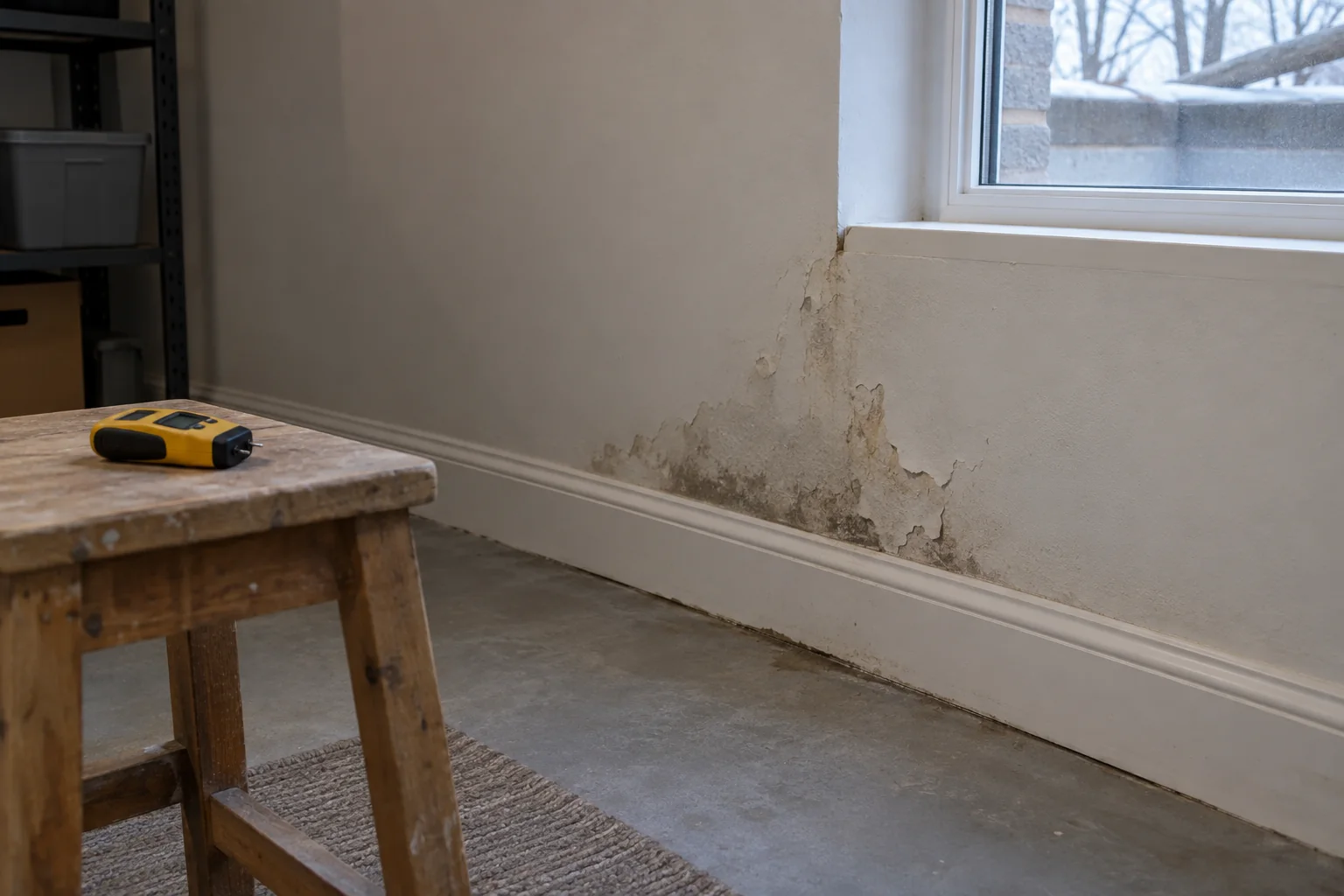
Monitoring is part of the work
The plan should include when conditions will be checked and how the findings will be communicated. A plateau in readings may call for a different approach, additional investigation or recognition that a material cannot reasonably be retained. Continuing the same equipment setup without understanding the lack of progress is not a useful completion strategy.
Tell the provider about tripped breakers, leaks, unusual equipment behavior or necessary changes to room use. Do not turn equipment off casually because the room feels dry or the noise is inconvenient. Instead, discuss practical adjustments to the setup and daily access. The provider should explain which changes affect the drying plan.
Example: moisture under a hallway floor
Imagine a small supply leak where the visible water was removed from a hallway, but moisture remains beneath a floating floor. The room's relative humidity improves after dehumidification, yet the affected assembly is not responding as expected. The next step may be to reassess the floor layers and drying access rather than assume that more days of the same setup will solve the problem.
This illustrative scenario shows the difference between conditioning room air and drying an assembly. It does not prescribe removal for every floor. The appropriate decision depends on the product, contamination, damage, access and the specific findings at the property.
What completion should explain
Ask for the final assessment or drying record, including the areas checked and any limitations. Completion of mitigation should be distinguished from completion of reconstruction. Some finishes may still require replacement even after the retained structure reaches its drying goal. Permanent source repairs may also remain outside the drying scope.
Before a repair contractor closes a cavity or installs a new floor, clarify the handoff requirements. Flooring products and installation methods can have their own substrate requirements. A restoration record informs that discussion; it should not be treated as permission to ignore the finish manufacturer's requirements or unresolved building conditions.
How drying costs are evaluated
Equipment type and quantity, time in use, monitoring, access work and the affected material volume can influence price. Ask how equipment charges are calculated and whether visits and moisture documentation are included. Request explanation if the anticipated duration changes, especially when a concealed condition is discovered.
Comparing estimates only by a daily machine rate can obscure major differences in the proposed work. A lower rate without monitoring, or a larger equipment count without a clear plan, is not enough to judge value. Focus on the affected assembly, the proposed goal, the measurement process and the planned next decision.
Drying and dehumidification questions
Is a dry surface enough to start painting?
How many days does structural drying take?
Can a household dehumidifier do the same job?
Does thermal imaging detect all hidden water?
Why would a wall need to be opened?
What documents should I keep?
Prepared for Sterling Heights property owners. Examples are illustrative; the scope, timing and material decisions require an assessment of your property.
Local service information ↗