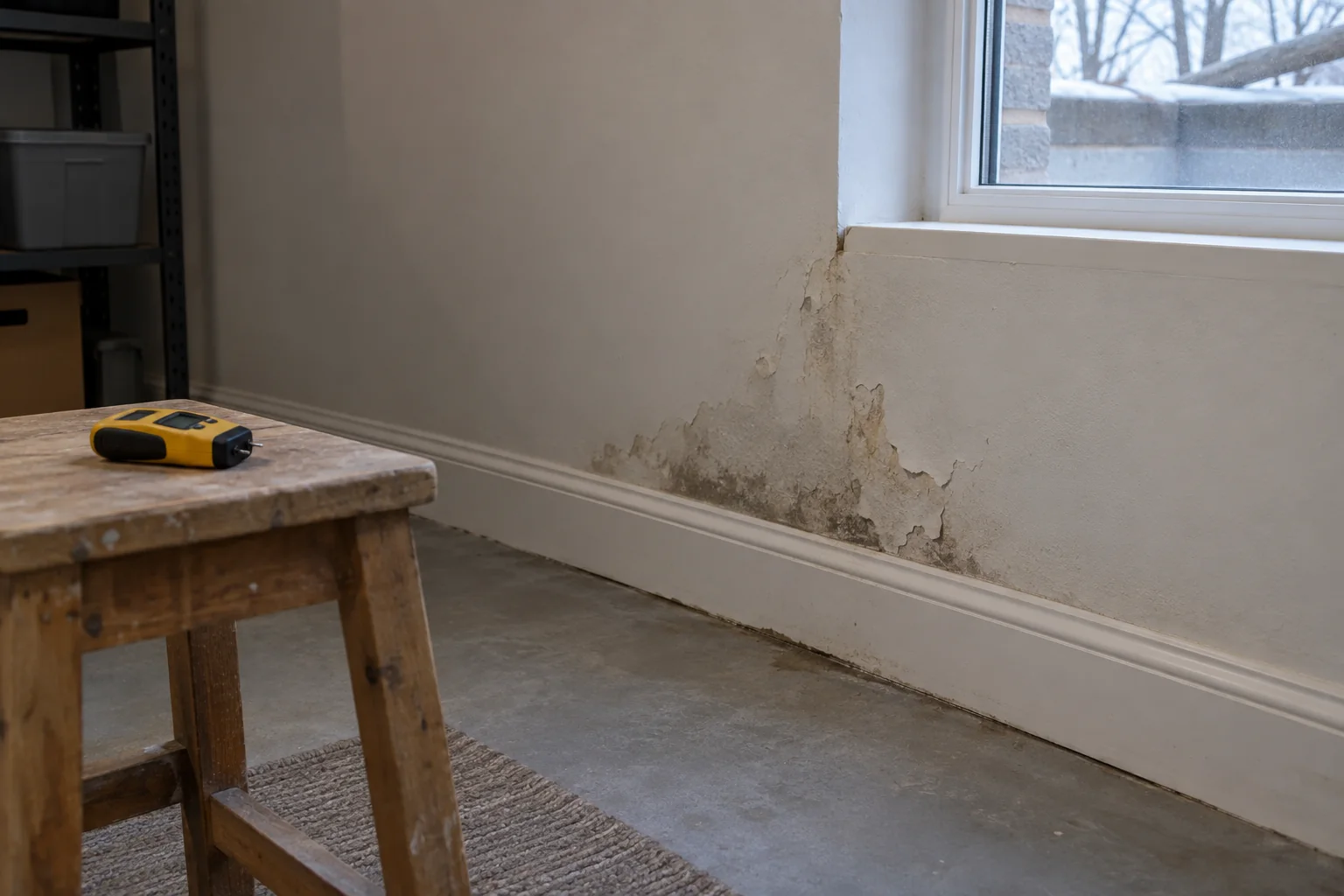
Investigate stained ceilings, wet wall cavities, insulation and concealed water paths.
A stain is a starting point, not the whole diagnosis
A brown ceiling ring, bubbling paint or a soft wall edge can be the first sign of water moving through a concealed assembly. The visible mark may be below or beside the actual source. Repainting can improve appearance while leaving the source and trapped moisture unresolved.
Call 586-488-0137 about ceiling and wall water damage in Sterling Heights. Mention whether the stain is growing, whether there is an active drip and what lies above or behind it. An upstairs bathroom, roof opening, appliance connection or recurring condensation issue may lead to different next steps. It is fine if you do not yet know the cause.
Keep clear of unstable or electrically affected areas
Do not stand beneath a sagging, bulging or visibly compromised ceiling. Do not puncture it to drain water yourself. Wet ceiling fixtures, outlets and wiring require appropriate professional attention. Keep people away from the area and use emergency services when there is immediate danger.
If the source is a known plumbing connection with a safely accessible shutoff, source control may limit further damage. Do not reach into a cavity or move through water to access utilities. Describe the condition from a safe location so the first conversation can establish the relevant priorities.
Investigating the route of water
Water may travel along framing or through openings before it produces a visible stain. A mark beneath a bathroom is useful context, but it does not prove which fixture or pipe is involved. A roof-related leak may similarly appear away from its entry point. Source investigation and moisture assessment should inform one another.
Ask which adjacent areas were checked, what instruments were used and what remains inaccessible. Thermal imagery can identify a temperature pattern to investigate, but does not independently establish every hidden condition. Access openings may be needed to understand wet insulation, framing or the back of finish materials. Their location and purpose should be explained in the scope.
Tell us the source, rooms affected and your Sterling Heights location.
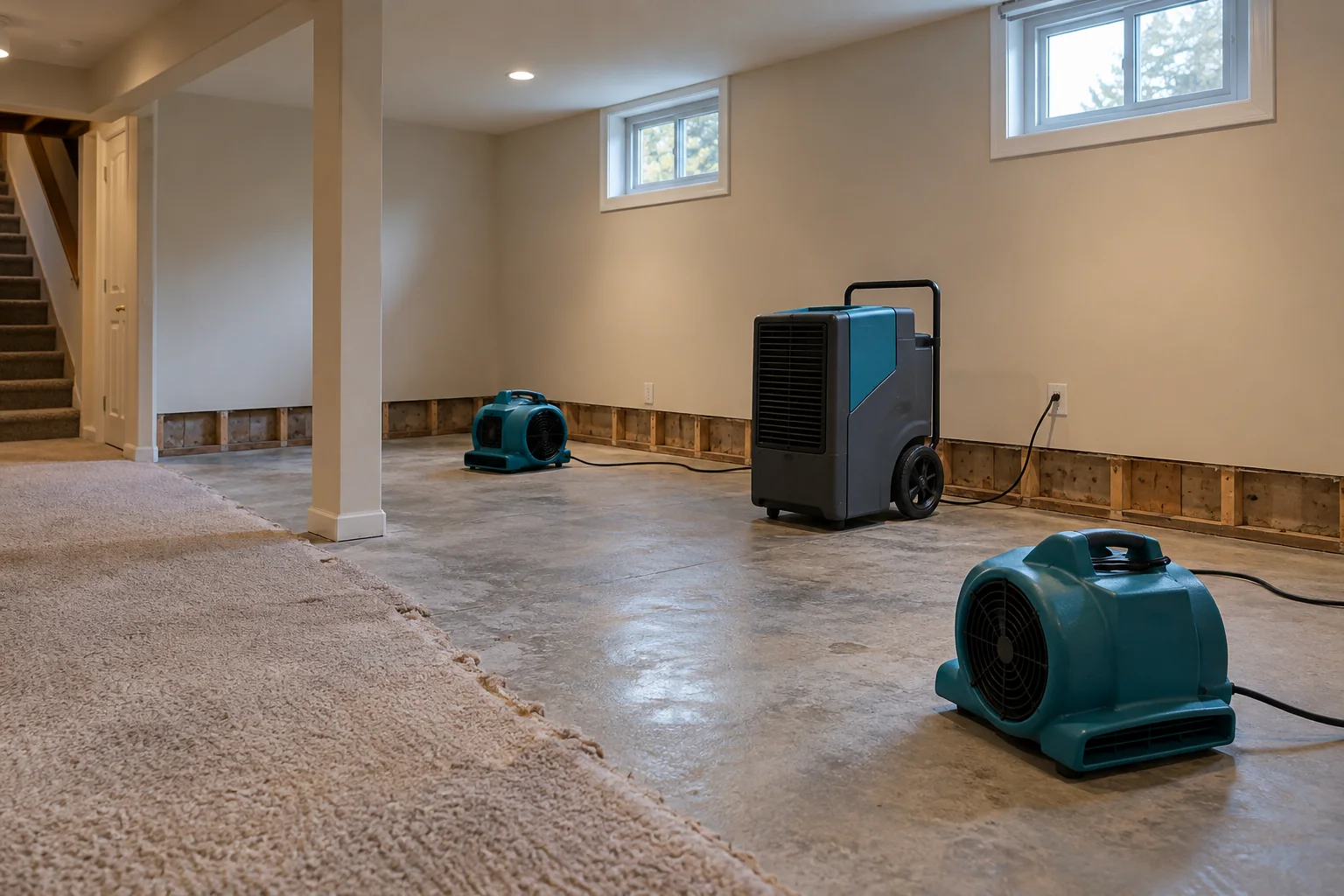
Drywall, insulation and finishes need individual decisions
The extent of damage, contamination, duration of wetting and assembly construction influence whether materials can be retained. Drywall facing, insulation and trim do not all respond identically. A wall may be cosmetically stained yet structurally intact, or look only mildly affected while damage behind it is more extensive.
Ask why removal is recommended, how far it will extend and how retained material will be dried and evaluated. No fixed cut height or single replacement rule can substitute for an assessment. If the scope changes after access is created, ask for the new findings and authorization details before additional repair work proceeds.
Drying before patching and painting
Where retention is appropriate, structural drying should have defined goals and monitoring. Drying a room's air is not the same as drying the inside of an assembly. Surface appearance, touch and the disappearance of a drip do not prove that all affected materials are ready to enclose.
Reconstruction may involve insulation, drywall, texture, trim and paint. Matching an existing finish can require a broader finishing scope than the small access opening itself. Ask how those repairs are priced and who will perform them. Make sure the permanent source correction is also addressed before the final finish hides the area again.
Example: a slow leak above a living room
Consider a hypothetical Sterling Heights home with a ceiling stain below an upstairs bath. A plumbing repair stops the drip, but assessment finds moisture in part of the ceiling cavity. The restoration scope may include controlled access, evaluation of insulation and framing, and drying before patching and finishing.
The pipe repair, affected cavity and finished ceiling are related but distinct parts of the incident. The right decision for this home is based on the findings, not simply the stain's diameter. This example is educational and is not a claim that any particular ceiling needs removal or can be repaired without replacement.
Repeated staining deserves a source review
If the same mark returns after prior repair, collect the earlier scope, source findings and any drying documentation. A recurring moisture condition can have more than one contributing factor. Tell the evaluator whether the stain follows rainfall, appliance use or a particular season; timing can be useful without establishing a diagnosis on its own.
Avoid repeated cosmetic repairs without reviewing the cause. A painted surface may hide changes temporarily and make the timeline harder to interpret. Ask what evidence would show that the source is corrected and what should trigger a follow-up if the condition returns.
Cost and repair coordination
Access, ceiling height, affected cavity size, insulation, wall coverings and finish matching can influence the estimate. A small visible stain is not a reliable price measure. Ask for separate descriptions of assessment, mitigation, source repair and reconstruction so you can compare like-for-like work.
For a condo or rental, identify who can authorize access to the room above, shared systems or concealed spaces. The interior repair may depend on work outside your unit. Keep written records of those responsibilities and scheduling constraints so the restoration does not end with an unresolved source behind a new finish.
Ceiling and wall damage questions
Should I poke a hole in a bulging ceiling?
Can a stain be left alone if it feels dry?
Does every wet wall need complete replacement?
Who repairs the leak itself?
Can I install new drywall while equipment is running?
Where can I learn about an upstairs pipe failure?
Prepared for Sterling Heights property owners. Examples are illustrative; the scope, timing and material decisions require an assessment of your property.
Local service information ↗